HealthTech / Product Design / Prototyping

Rapid product design for a high-stakes health experience

UX Design Lab designed a mission-critical IVF support experience under extreme timeline pressure, using a global follow-the-sun workflow to deliver a high-fidelity prototype in 45 days and help support the client’s next funding round.

45 days

Delivery timeline

200+ screens

Prototype size

24-hour global

Workflow model

Funding round supported

Business outcome

Product DesignMobile UXPrototypingHealthTech

Introduction

The Problem

The client needed a high-fidelity health product prototype fast, without sacrificing coherence or credibility. They were preparing for a funding round in which the product experience itself would be evaluated by investors — making quality, completeness, and clinical believability non-negotiable, even under a 45-day window.

The Response

Stood up a global follow-the-sun workflow so design work progressed continuously across time zones without handoff loss.

Industry

HealthTech

Services

Product Design, Mobile UX, Prototyping, HealthTech

Problem frame

compressed timeline, high-stakes user journey, investor readiness

Outcome focus

speed, prototype delivery, fundraising support

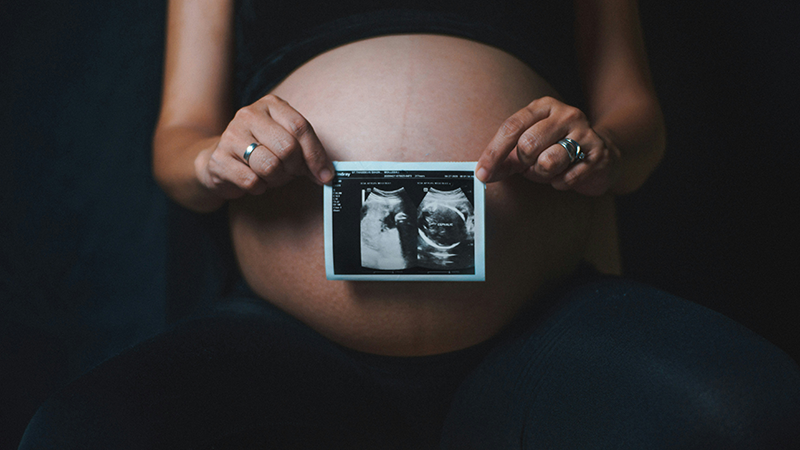
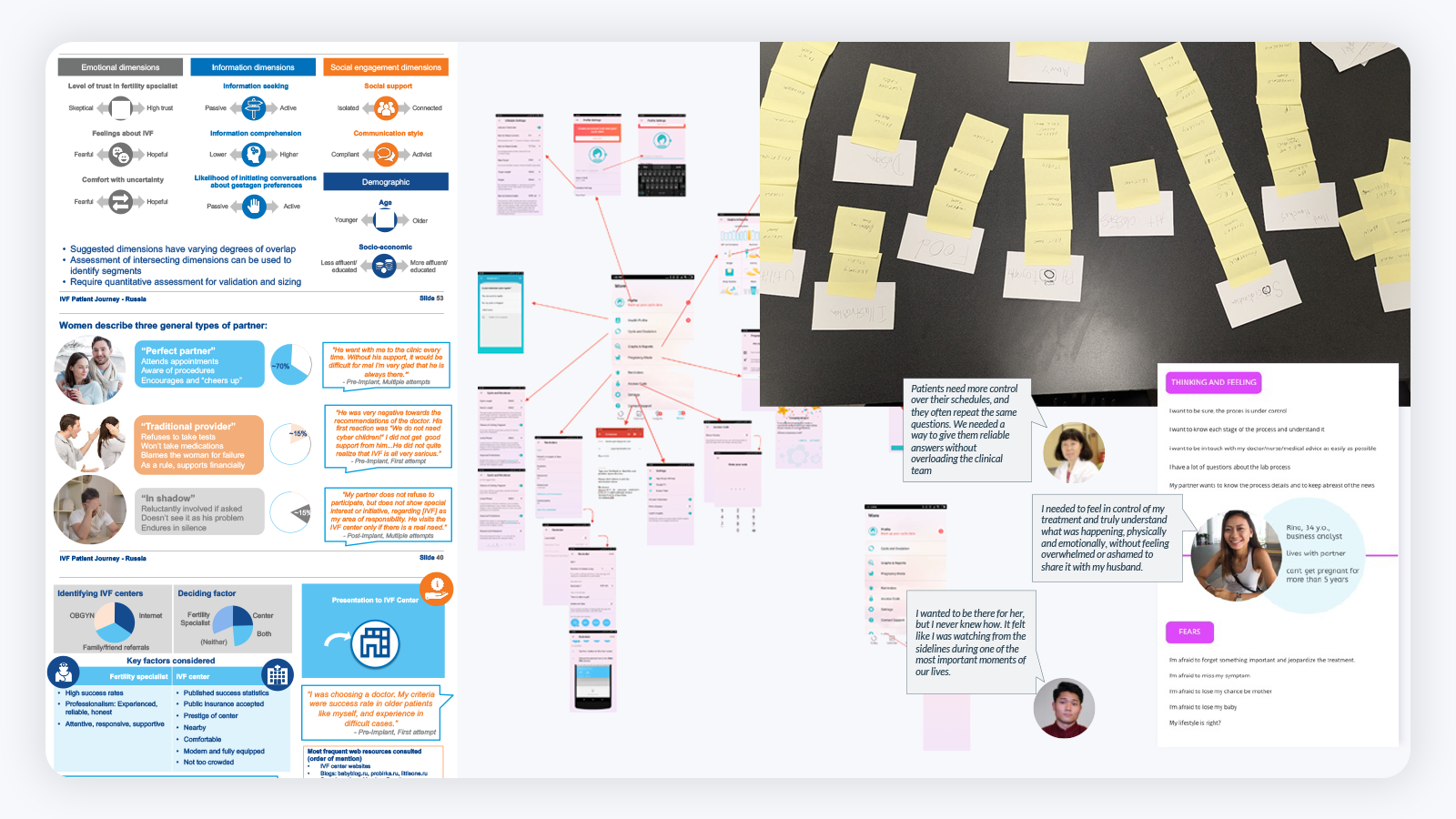
IVF support app case study overview
Recovered overview image from the live IVF case study.

Product context and urgency

The client needed a high-fidelity health product prototype fast, without sacrificing coherence or credibility. They were preparing for a funding round in which the product experience itself would be evaluated by investors — making quality, completeness, and clinical believability non-negotiable, even under a 45-day window.

How UX Design Lab handled the speed constraint

With 200+ screens required in 45 days, a standard team structure would not work. UX Design Lab designed the delivery model alongside the product itself.

  1. Stood up a global follow-the-sun workflow so design work progressed continuously across time zones without handoff loss.
  2. Established a shared design language and component library early to maintain visual coherence across a large and rapidly growing screen count.
  3. Prioritized the core user journey — the IVF treatment pathway — to ensure clinical logic and emotional flow were right before expanding to secondary screens.
  4. Ran daily async review cycles to surface misalignments early and keep the prototype investor-ready throughout.
  5. Maintained documentation discipline so the prototype could be handed over as a legible, buildable specification.
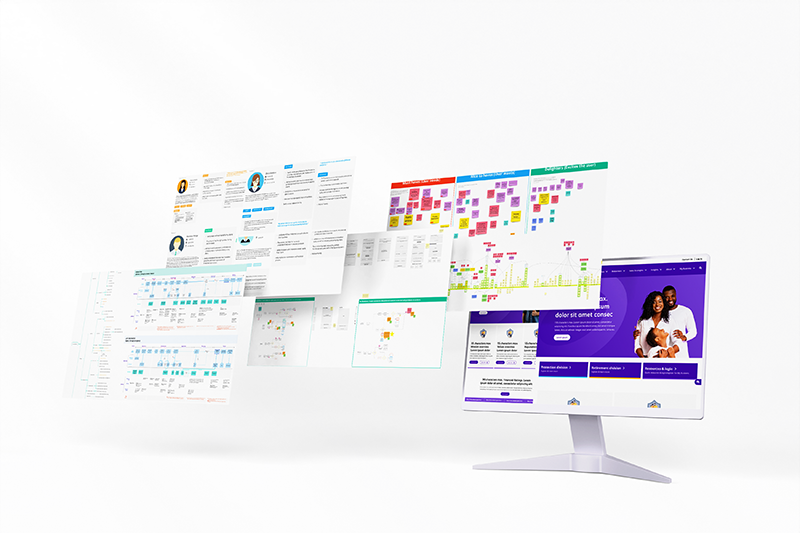
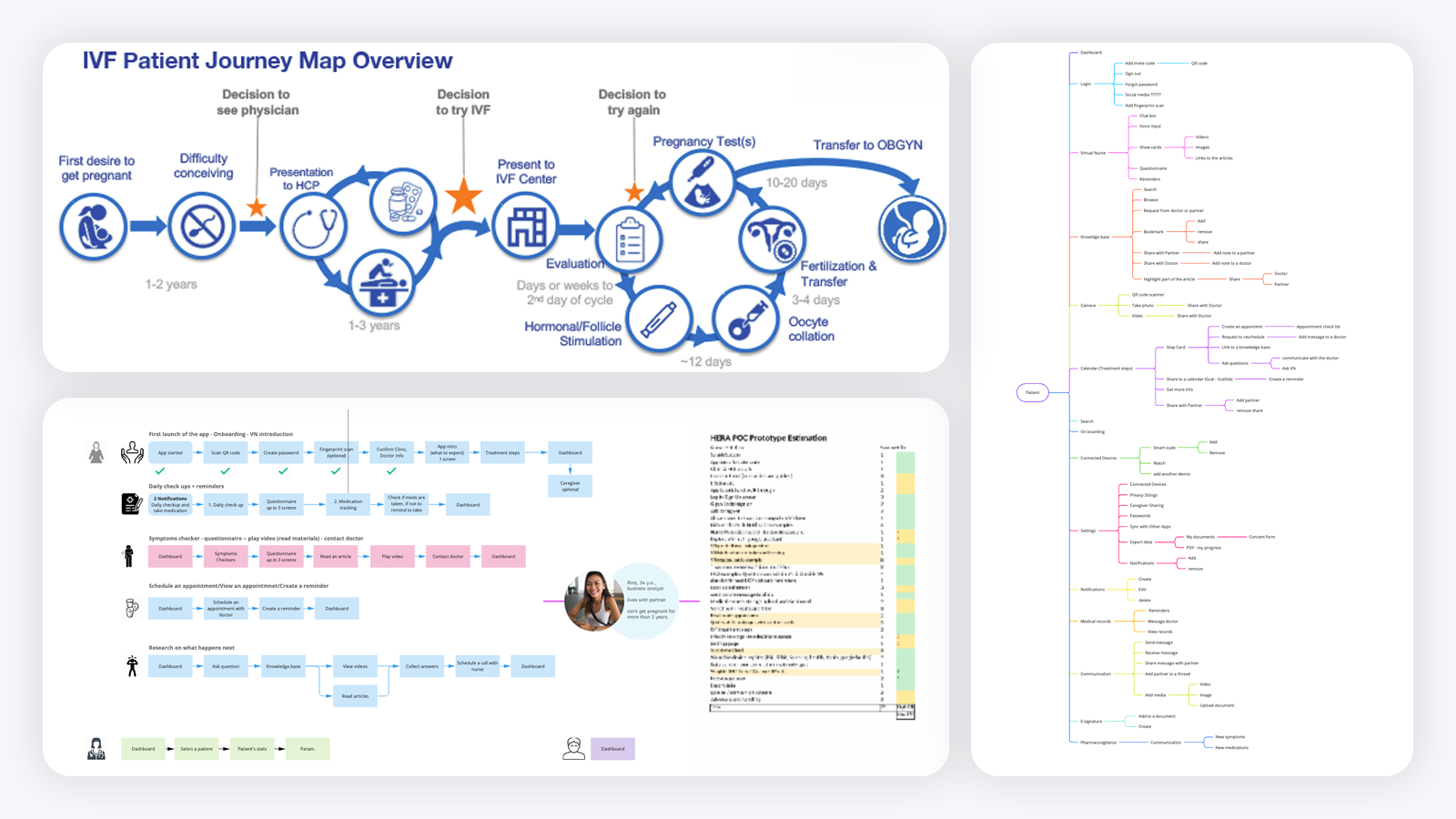
IVF support experience overview from the live case study
Recovered overview artifact from the live IVF case study.
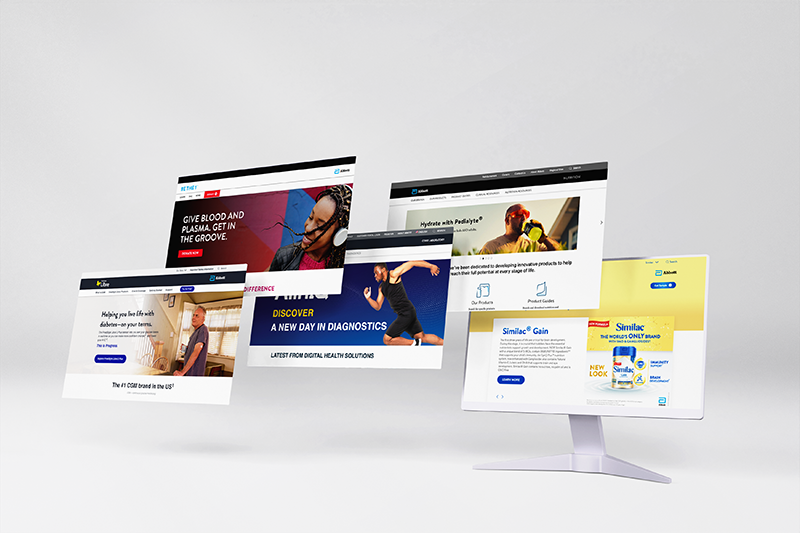
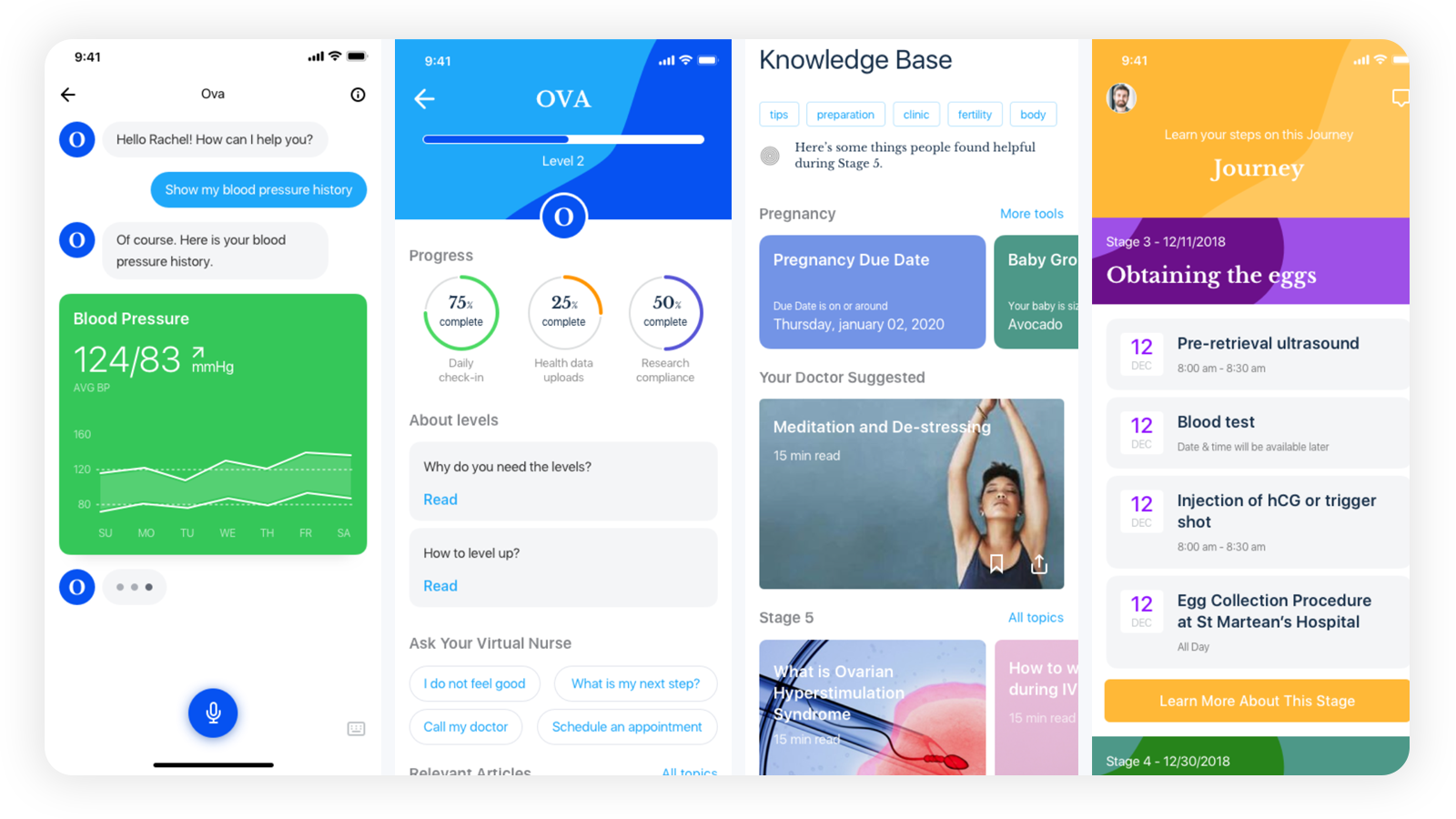
IVF product interface screens from the live case study
Recovered product interface artifact from the live IVF case study.

What the prototype delivered

The final prototype was a complete, investor-ready representation of the IVF support experience — not a sketch or wireframe, but a high-fidelity artifact built to survive investor scrutiny.

Step 01

200+ screens covering the full treatment journey, from onboarding through cycle tracking and clinical communication.

Step 02

A shared component library and design language that kept the large prototype visually consistent throughout.

Step 03

Role-specific flows for patients, partners, and clinic staff built around real-world IVF treatment logistics.

Step 04

Handover documentation structured to support an engineering team picking up the prototype for build.

Research and journey artifact from the live IVF case study
Recovered research artifact from the live IVF case study.

The Outcome

The prototype was delivered on schedule at full fidelity. More than 200 screens covered the primary treatment journey and supporting workflows with enough detail and coherence to be credible to clinical reviewers and investors alike. The client used it to support their next funding round.

45 days

Delivery

200+

Screens

24-hour global

Workflow

Funding round supported

Business result

More Work

View all work
Waterway logistics case study overview

35% Workflow improvement

Service design for complex logistics operations

UX Design Lab used immersive field research and service design to turn fragmented logistics coordination into a role-aware operational platform, improving workflows by 35%, reducing communication incidents by 21%, and cutting role involvement by 70%.

UX ResearchService DesignProduct Design
Read case study
Strategic de-risking case study overview

$900k+ Cost avoided

Strategic product de-risking before build

UX Design Lab ran a rapid diagnostic that showed 93% of the client’s issues were operational rather than software-related, helping leadership avoid an unnecessary build and redirect investment into a clearer service roadmap.

StrategyService DesignDiagnostics
Read case study
Unified digital ecosystem overview across multiple properties

70+ Properties unified

Operational redesign for a fragmented digital ecosystem

UX Design Lab helped a major insurance organization replace fragmented delivery, duplicated work, and team burnout with a shared system of templates, governance, and collaboration — cutting departmental costs by 20% and reducing developer dependency by 60%.

Design OpsDesign SystemsResearch
Read case study
Enterprise design system overview spanning multiple branded experiences

800+ Properties supported

Design system governance at enterprise scale

UX Design Lab helped a global enterprise replace fragmented delivery with a governed design system and coded source of truth, reducing production time by 40%, lowering delivery costs by more than half, and cutting accessibility defects by 18%.

Design SystemsDesign OpsGovernance
Read case study
Accessibility governance overview from the live case study

18% Accessibility defects reduced

Accessibility governance at enterprise scale

UX Design Lab turned fragmented accessibility work into a repeatable governance model by integrating standards, reviews, and delivery gates into how digital work got done, reducing defects by 18% and improving audit readiness.

AccessibilityGovernanceDesign Ops
Read case study