
Gaps stay hidden
Skill gaps are often guessed at, not measured. By the time they show up in delivery, the damage is already expensive.
Flagship Product
Team Capability Engine helps leaders spot hidden capability gaps, weak support patterns, and delivery risk before the dashboard turns red. It connects diagnostics, mentorship, and team signals into one system built for real operating pressure.
TCE came out of the same pattern showing up again and again: teams are expected to deliver at speed while capability gaps, weak handoffs, and coaching needs stay half-visible until the cost is already real.
Skill gaps are often guessed at, not measured. By the time they show up in delivery, the damage is already expensive.
Managers are expected to support growth while juggling deadlines, staffing, and delivery pressure. Development gets pushed aside.
Most teams can see lagging delivery pain. Very few can see the human signals creating it upstream.
Mentorship and education often exist as good intentions, not as a system tied to capability, progress, and real team needs.
01 / 07
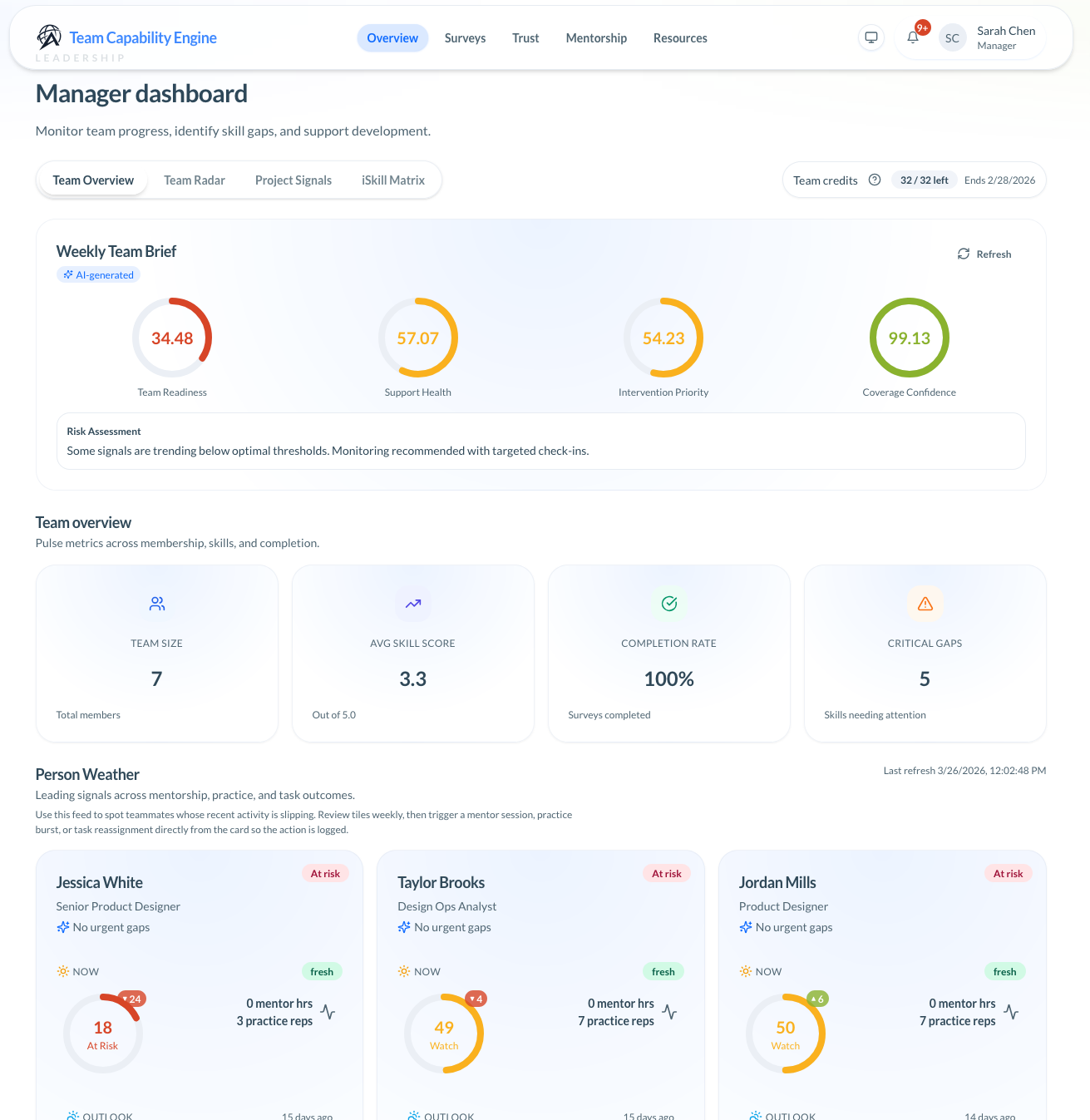
Monitor team readiness, support health, and delivery signals in real time.
02 / 07
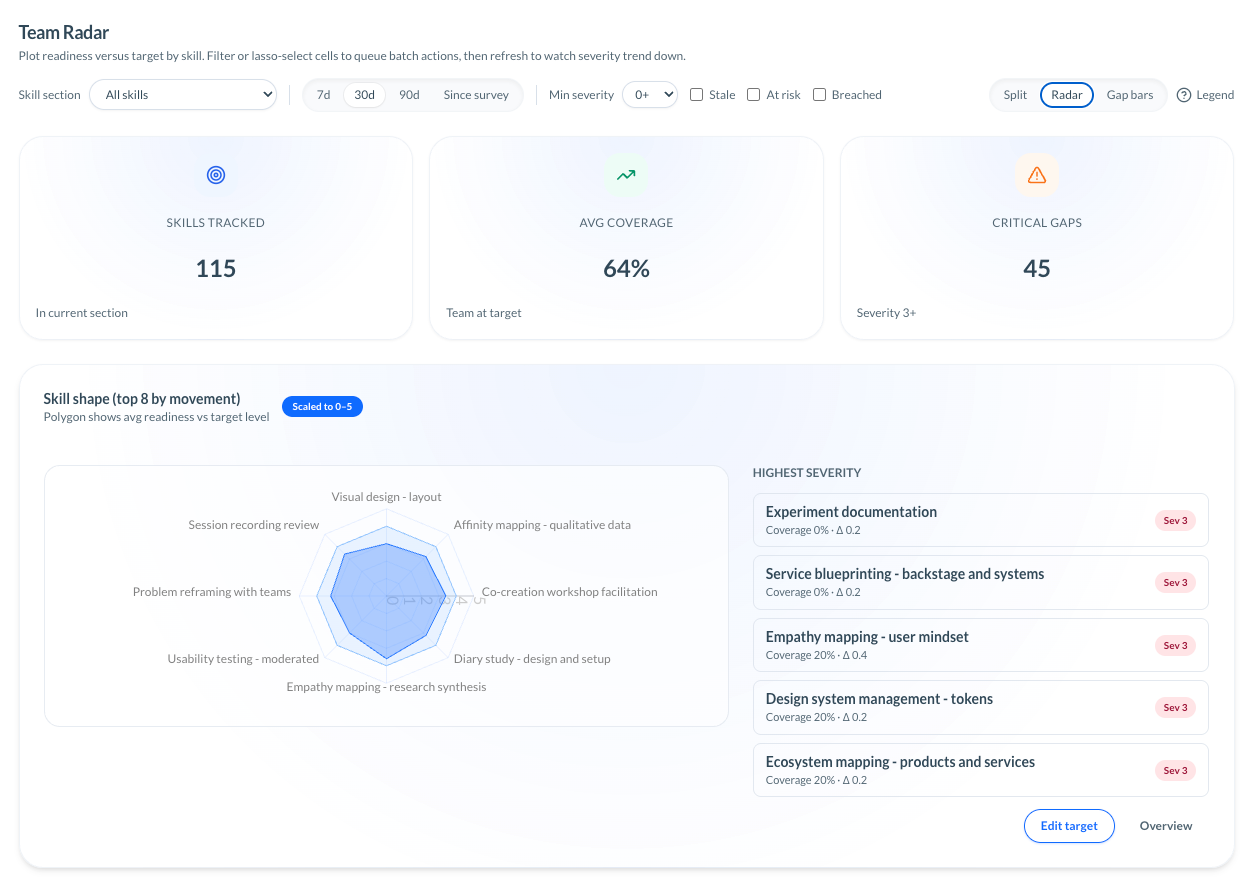
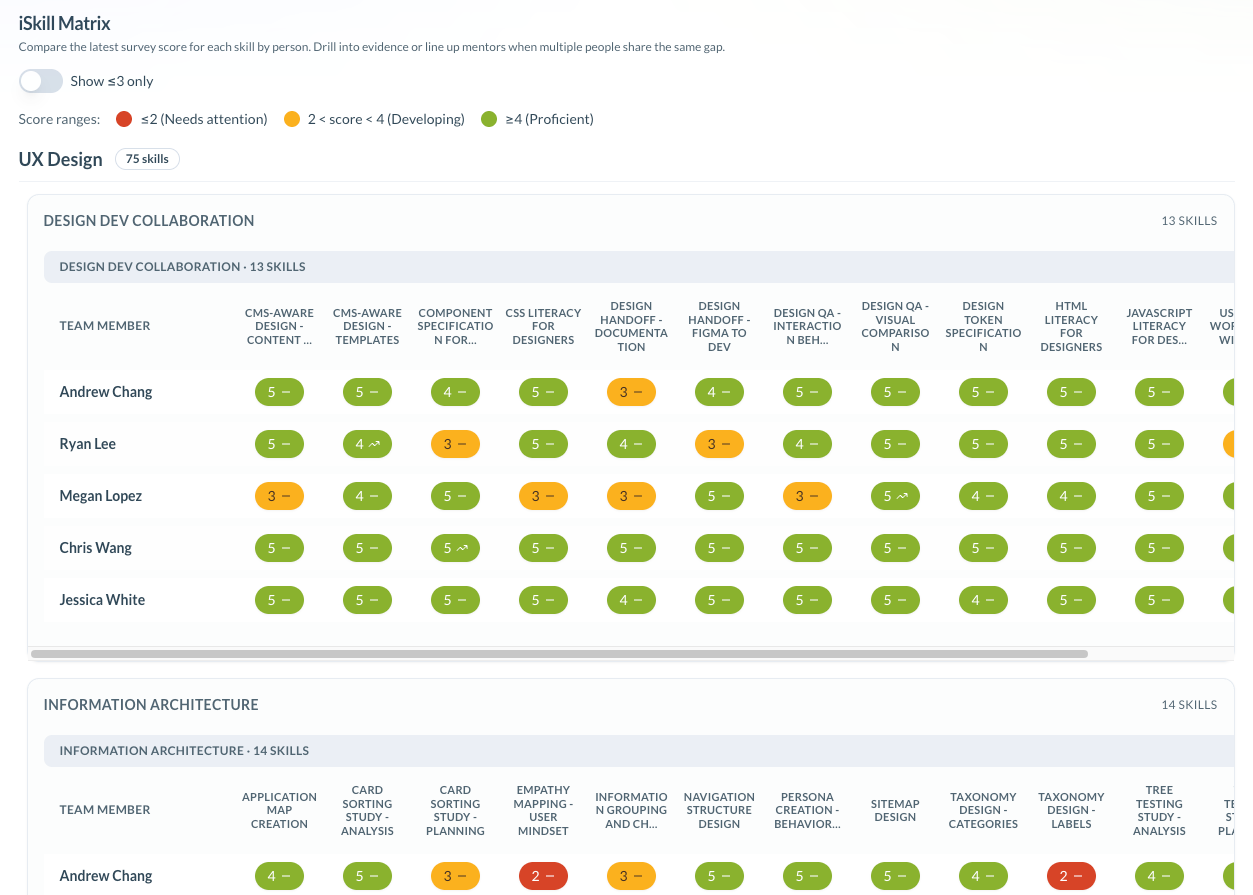
Map coverage gaps across the whole team before they reach delivery.
03 / 07
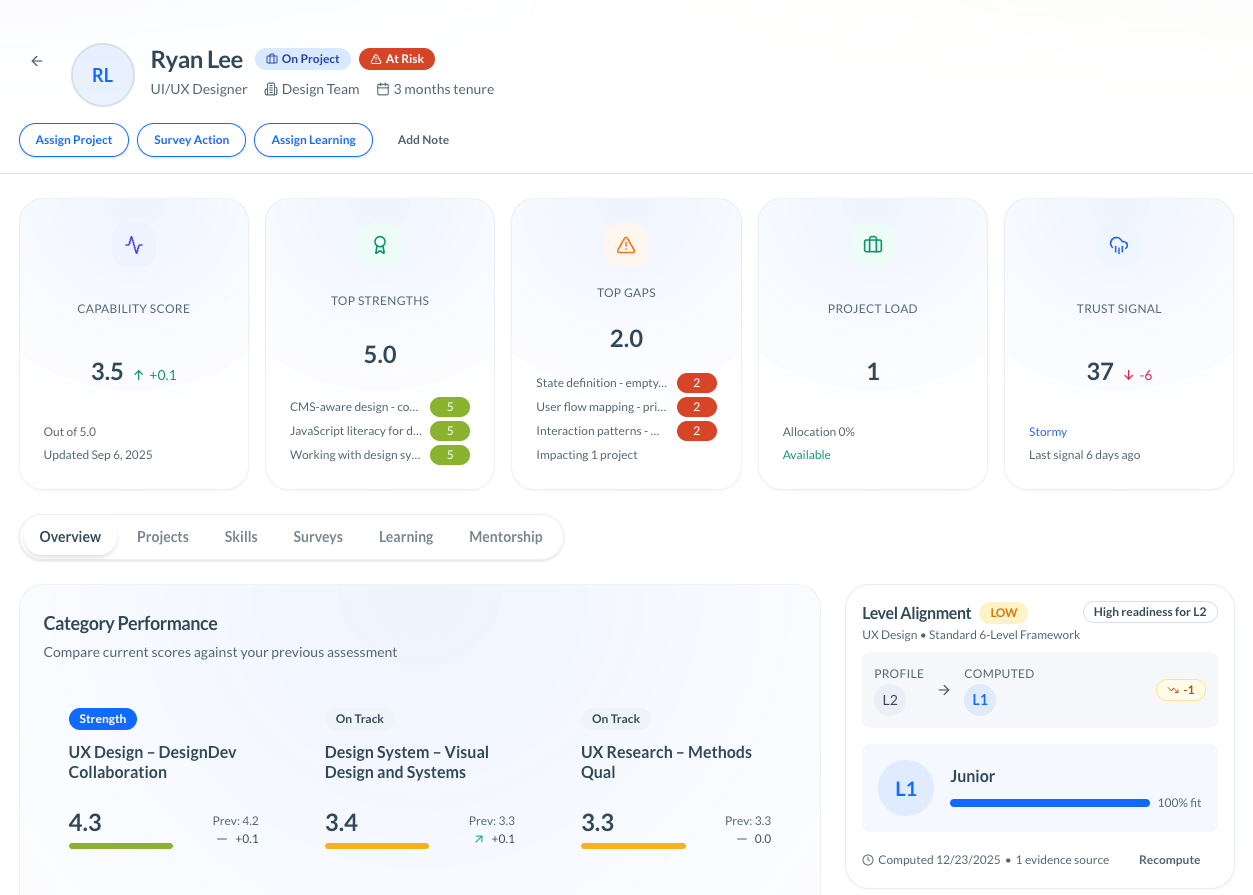
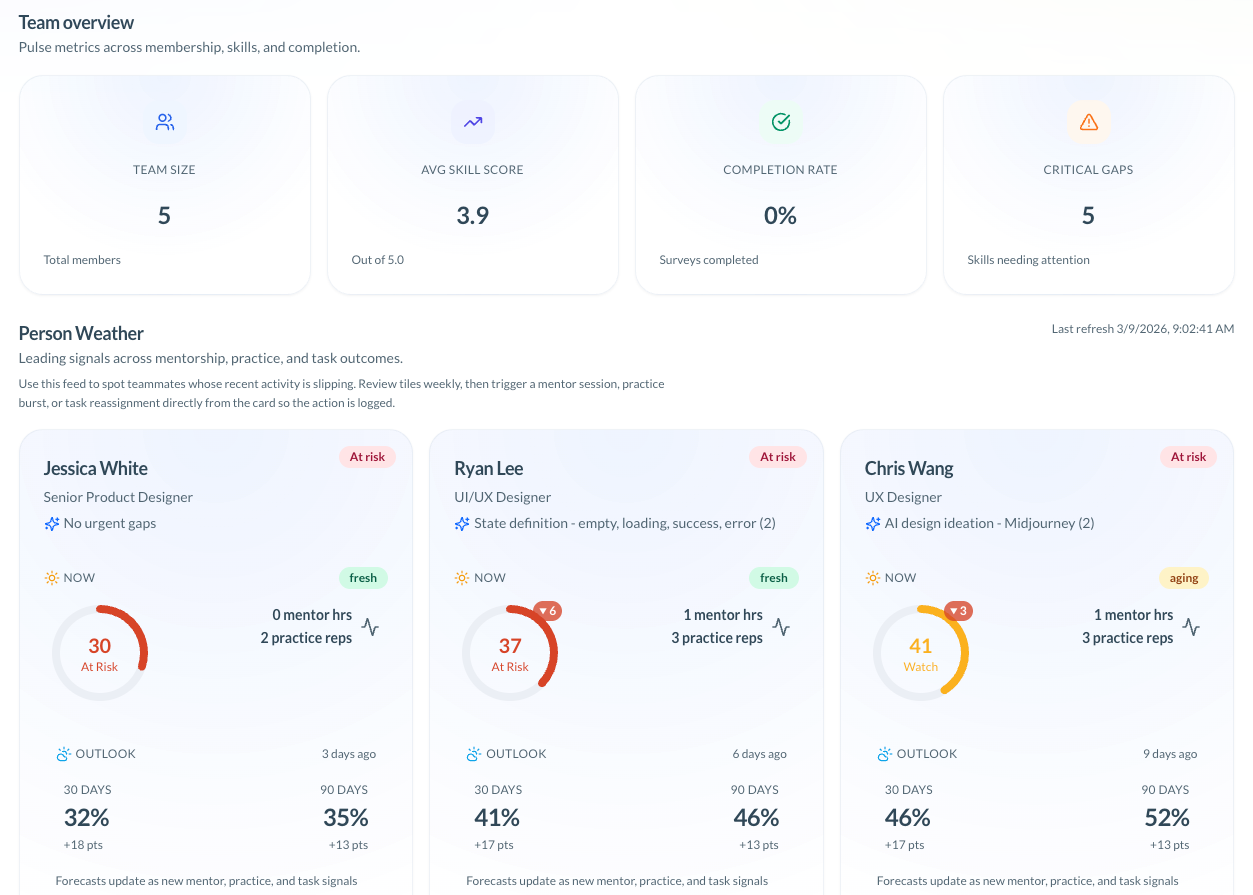
Individual capability scores, growth trends, and mentorship readiness at a glance.
04 / 07
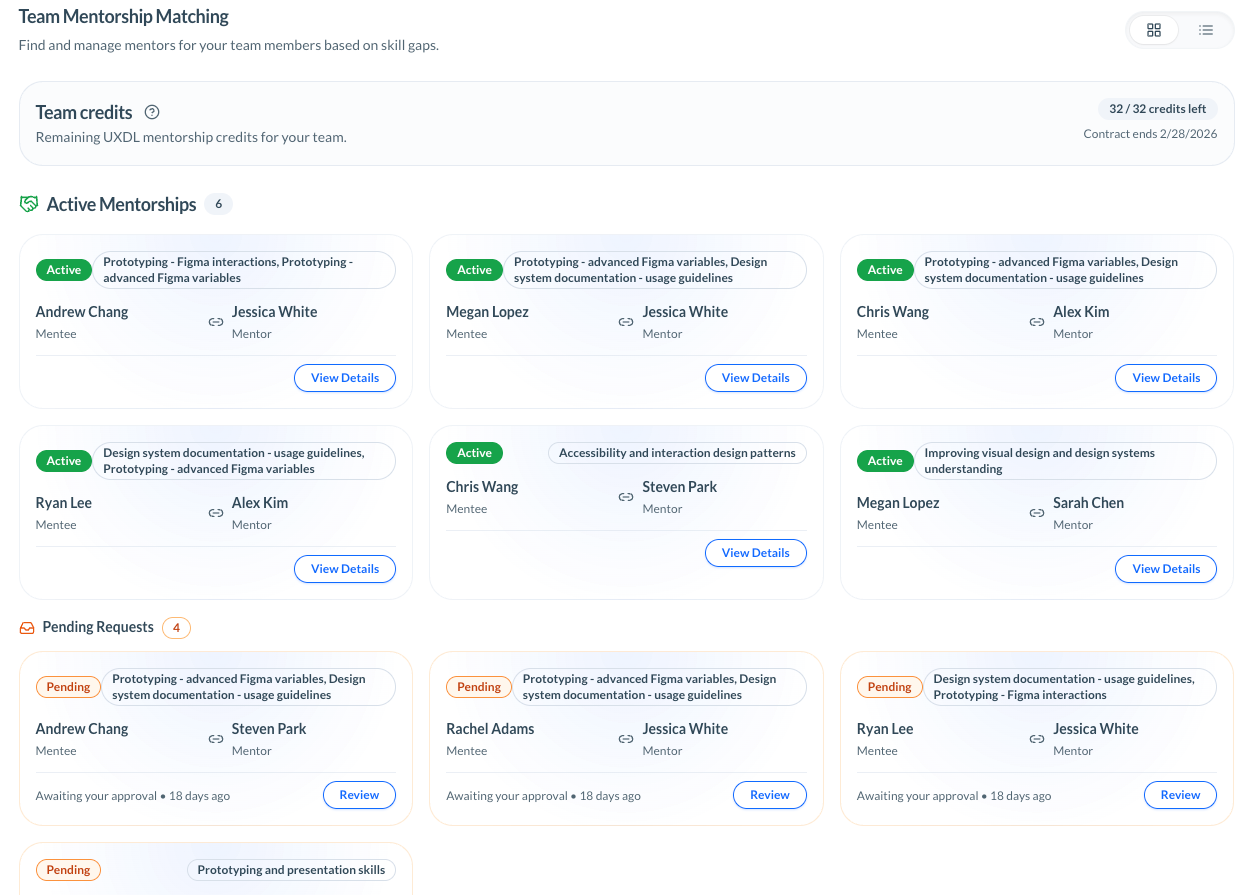
Mentor pairs matched to skill gaps automatically — not just availability.
05 / 07
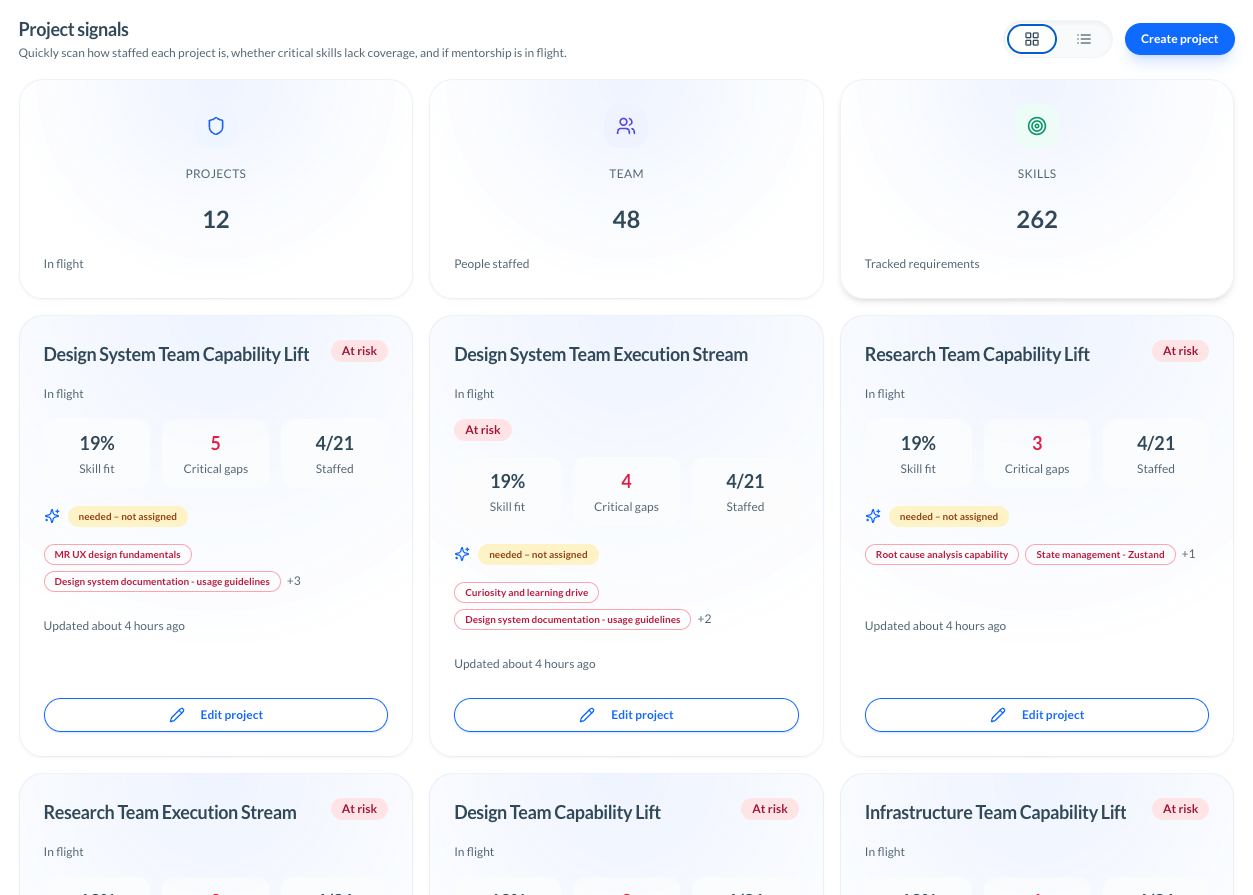
Live project health linked to team capability and delivery risk.
06 / 07
Person-weather signals and weekly briefs that surface what needs attention first.
07 / 07
Full team skill inventory with proficiency levels and critical gap highlights.
TCE is not one isolated tool. It is a connected system built to diagnose, develop, and sustain healthier delivery.
Part 1
Structured diagnostics surface capability patterns, skill gaps, and development priorities across teams.
Outcome: clearer visibility into what the team actually needs.
Part 2
Targeted mentorship and education turn insight into action through guided support, learning paths, and practical development.
Outcome: growth becomes operational, not just aspirational.
Part 3
Team-level behavioral signals help leaders see collaboration health, support strength, and risk building beneath the surface.
Outcome: teams get earlier warning before culture and delivery start slipping.
This is where the product stops sounding theoretical. TCE is meant to improve the mechanics of real work.
Managers can see capability patterns with more precision instead of relying on instinct, noise, or org-chart assumptions.
Mentorship and education get tied to actual need, not random goodwill or whatever training happens to be available.
When capability gaps surface earlier, teams can reduce handoff friction, misalignment, and downstream cleanup.
Leaders get a clearer way to coach, prioritize support, and make development part of delivery instead of separate from it.
Trust, support, and collaboration become visible enough to manage before they collapse into attrition or project drag.
Capability data creates a stronger base for staffing, prioritization, and organizational decision-making.
TCE is not disconnected from UX Design Lab's services. It grew out of the same operational work and feeds directly back into it.
When delivery slows because handoffs, structure, or standards are weak, TCE helps make the people-side risk visible. Operations services help fix the system around it.
Explore operations servicesMentorship is not a side offering here. It is part of the engine. TCE identifies where support is needed, then channels that into guided development and education.
Explore mentorship servicesSometimes a capability issue is actually a decision issue. Strategy services help clarify priorities, direction, and what the team should be solving in the first place.
Explore strategy servicesOperational quality includes inclusive delivery. As capability and governance improve, accessibility stops being cleanup and starts becoming part of the system.
Explore accessibility servicesTCE is meant for people carrying the weight of delivery, growth, and team health at the same time.
For leaders who need clearer visibility into whether team capability is helping or quietly undermining execution.
For leaders balancing quality, team growth, staffing, and delivery pressure without enough structured signal.
For people expected to coach, mentor, and support teams while still shipping work on time.
For teams trying to make development more measurable, targeted, and connected to real work.
The point is not to sound visionary. The point is to show where this is headed and why it matters now.
Format: PDF whitepaper
A deeper look at the operating problem behind TCE, the system design, and the case for measurable capability development.
Read whitepaperAccepting early design partners
TCE is positioned as an emerging product grounded in live consulting patterns, not a detached thought experiment.
Start a projectConnection: product + consulting
The product is supported by real operations, governance, mentorship, and education work through UX Design Lab.
Explore servicesA few questions this page should answer before anyone has to email you.
Both. TCE is the product layer. UX Design Lab services help teams act on what the product reveals, especially in operations, governance, mentorship, and education.
Yes. Mentorship and education are part of the engine, not just a related offer sitting off to the side.
Start here when the team is shipping with hidden gaps, inconsistent support, weak handoffs, or too little visibility into the human side of delivery.
Start with services when the problem is already operationally visible and the organization needs design strategy, governance, accessibility, or embedded support right away.
What to know
UXDL products make hidden team capability, DesignOps, AI-era product design, governance, and delivery risk easier to see before the cost shows up downstream.
What UXDL does
UXDL products package recurring UX consulting, DesignOps, AI-era product design, and capability patterns into structured diagnostics, dashboards, and decision support.
Who it helps
The best fit is a team that ships work but lacks early warning signals for skill gaps, fragile handoffs, or support needs.
When to call
Start when delivery looks busy but leadership cannot tell whether the team has the right coverage, support, or operating model.
Proof
The product layer reflects patterns seen in enterprise delivery, governance, mentoring, and operational diagnostics.
View related workNext step
Use the intro call to decide whether a product snapshot, assessment, or service engagement is the right starting point.
Start a projectIf delivery risk is building under the surface, start with the product built to expose it. If the work needs more than a tool, UX Design Lab can support the system around it too.