
- Design Thinking
- Leadership
- Process
Fix the System, Not the Symptoms: The Twelve Scrolls of Systems Thinking
Fix the system, not the symptoms. A comic-style cheat sheet of 12 systems tools to map chaos, find constraints, and ship fixes that stick.
Briefing · Leadership / Transformation
Practical playbook to align teams on consent, fairness, explainability, and retention using a shared vocabulary. Turn words into governance and ship with trust.
The five-star rating told me she was a satisfied customer. Her words told me she was a detective.
That’s the thing about words. They aren’t neutral containers of meaning. They are signals. Every word carries a nuance, an emotional undertone, and a cultural implication that shapes how we see the world and how we act in it.
For me, this isn’t theoretical. English is my second language, and perhaps because of that, I’ve trained myself to listen for the small shifts, not just what is said, but how. Early on, tuning into nuance felt like survival. Later, I realized it was an advantage. These fine-grained signals are the foundation of my work.
During a contextual inquiry for a SaaS product, a participant gave us five stars. On paper: top marks. When I asked why, she said:
“Because my background is investigative journalism, I like that every time I open the app, I have to find the information I critically need. I use my investigative skills to track it down.”
Semantically, words like investigative, critical, and find frame the experience as a hunt, not frictionless efficiency. Sentiment-wise, the rating was positive, yet the vocabulary carried undertones of friction she personally found satisfying.
So what? That insight created a product design strategy: simplify the experience and reduce friction. Engagement increased, while support tickets dropped from new and existing users.
Nowhere do these linguistic signals matter more than in the high-stakes world of business discovery and experience design. If your teams can’t align on the meaning of a handful of hot words, you won’t align on decisions, risk, or launch readiness. In practice, words are your operating system.
In a multi-month healthcare project, during design thinking workshops on ethical data use, I found our toughest obstacles weren’t technical.
They were semantic.
The same term pulled different meanings (and different risks) for different functions. Until we aligned on language, we couldn’t align on action.
First, we set a bridging prompt that put every function’s non-negotiables in one sentence:
How might we protect people and create value by using data responsibly, with decisions we can explain, prove compliant, and operate at scale?
That line gave each group a reason to lean in: protect people (regulatory), create value (business), responsibly/explain (brand, DS, legal), prove (evidence, audit), scale (DS/ops).
Then we worked through the hot words.
So what? Getting the words right didn’t make our models smarter overnight. It made our organization smarter. Fewer rework loops. Cleaner launches. Faster legal reviews. And when auditors, customers, or the press asked “How do you know?”, we could point to evidence mapped to definitions we had already aligned on.
Language alignment fails without cultural alignment. Leaders set emotional weather with their lexicon. Ultimately, leaders must make the call and show the way.
I remember a job post shared by a former colleague:
“Come work for a great leader.”
One word, “for,” signaled hierarchy, not partnership. “Work with” would have implied collaboration and mutual respect. These micro-signals compound inside companies:
Why this matters for leaders: people read between the lines.
When a memo says, “We’re reallocating resources; some roles will be impacted, but productivity must not drop,” tired teams hear dehumanizing nouns (“resources”), euphemisms (“impacted”), and pressure (“must not drop”).
A more humane version: “We’re changing how we work. Some roles will change. If your role is affected, your manager will speak with you first; we’ll offer options and support. For the next two weeks, we’ll pause non-critical work, reset goals, and check workloads together.” It communicates the same decision with clarity, dignity, and psychological safety. The decision doesn’t change; the words determine how people experience it, and whether morale bends or breaks.
Instead of: “Productivity must not drop during the transition.”
Try: “We’ll re-scope together so the most important work moves forward at a sustainable pace.”
Signal: shared ownership and care for energy, not fear.
Instead of: “We’re rolling out a mandate next week.”
Try: “We’re starting a pilot, and we’ll adjust based on your feedback before we scale.”
Signal: safety to learn and an invitation to shape the outcome.
Instead of: “We failed to hit the target; no excuses.”
Try: “We learned where the plan didn’t match reality. Here’s what we’ll try next, and what we’ll stop to make room.”
Signal: growth mindset and focus on next steps, not blame.
Instead of: “These are aggressive targets; push harder.”
Try: “These are ambitious and achievable. My job is to remove obstacles. Tell me what’s in your way.”
Signal: commitment and support; performance with partnership.
Instead of: “Keep questions to a minimum; we’re tight on time.”
Try: “We’ve saved 10 minutes for questions. If we run out, I’ll follow up and share answers with everyone.”
Signal: psychological safety and respect for voices.
Instead of: “We’re reallocating resources next quarter.”
Try: “We’re reshaping teams next quarter. If your role changes, your manager will meet with you first, and we’ll support the transition.”
Signal: dignity and clarity without euphemisms.
Instead of: “Don’t do anything that gets us sued.”
Try: “We protect people and earn trust. If you’re unsure, ask early. We’ll solve it together.”
Signal: purpose-driven standard and an open door.
Alignment on language isn’t facilitation. It is governance. Leaders choose the words, fund the proof, and model the behavior.
Codify the non-negotiables (for example, protect people, create value, prove compliance, explain decisions, operate at scale). Tie them to OKRs so language isn’t just posters. It is how performance is judged.
Who decides the definition of consent? Who breaks ties on fairness metrics versus accuracy? Publish a simple RACI so debates end with accountable owners, not endless meetings.
Glossaries, model cards, DPIAs, logging, red-teaming, vendor attestations. These take time and money. Unfunded “ethics” is theater. Leaders budget for it.
Make lexicon mapping, frame flips, and We will/We won’t guardrails part of the SDLC, PRD reviews, and vendor onboarding. Build a prompt and definition library so teams reuse aligned language instead of reinventing it.
In all-hands, design reviews, and board updates, speak the shared language: say explanations a person can act on, not we’ll explain somehow; say retention by purpose, not keep it just in case. Your vocabulary is the policy people follow.
Promote teams that surface tough trade-offs early and document definitions with evidence. Celebrate “we won’t” decisions that protect people, even when they slow a launch. People notice what gets praised.
Review a few launches each quarter for language drift. Did our shipped copy mirror our glossary? Did vendors meet the words we required? Close gaps publicly so the lexicon stays alive, not ornamental.
Bottom line: alignment on language is a leadership decision, not a facilitation trick. When leaders choose the words, assign the owners, fund the proof, and use the lexicon themselves, the organization follows: faster, safer, and with integrity.
Words aren’t just words. They’re the operating system for ethical tech. They reveal hidden truths in research, set the guardrails for responsible AI, and create the culture that decides what ships and what shouldn’t. Mastering them isn’t merely a professional skill. It’s a daily practice in empathy and effective creation.
The next time you convene a data workshop, draft a PRD, or brief your board, pause and ask: What signals are these words sending, and can we prove what they mean?
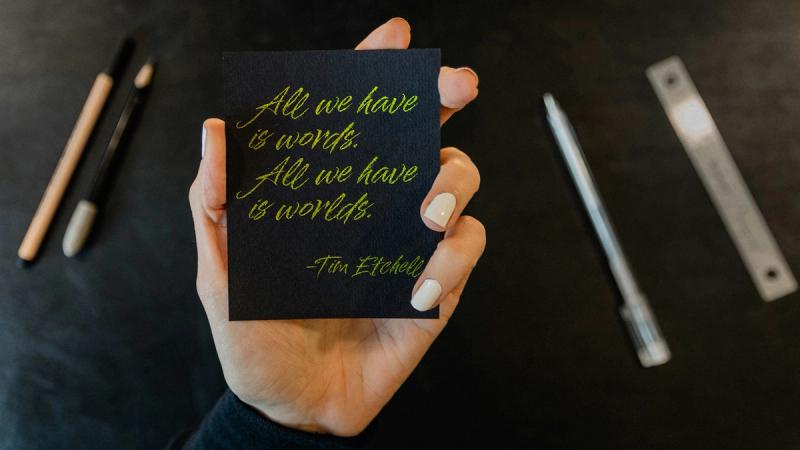
“The limits of my language mean the limits of my world.”— Ludwig Wittgenstein
Listen · AI-narratedSummary
0:00Keep reading
Selected from the same topics.
Fix the system, not the symptoms. A comic-style cheat sheet of 12 systems tools to map chaos, find constraints, and ship fixes that stick.

Discover how systems thinking elevates UX from execution to strategy, giving design leaders the influence they deserve in 2025 and beyond.

Discover how ambient intelligence is transforming UX design with seamless, sustainable, and inclusive systems that balance trust and privacy.
Contact
Tell me what you are building, changing, or trying to make better. You do not need a polished brief.
Prefer email? info@uxdesignlab.com
I read every inquiry personally and usually reply within one business day.