

- Future of Work
- Critical Thinking
- AI
The Distance Between Thought and Thing
What changes when the distance between a question and what we can create to explore it begins to collapse, and judgment becomes a harder skill?
Briefing · AI / Orchestration / Operations

Generative and agentic systems break in ways that classic UX frameworks were not built to catch. A hallucinated citation can look identical to a sourced answer. An agent can take an irreversible action that the user never saw coming. A screen reader can lose its place every time the model finishes a sentence. Nielsen's heuristics, Microsoft's HAX guidance, and Google's PAIR guidebook still matter. They are just not enough on their own.
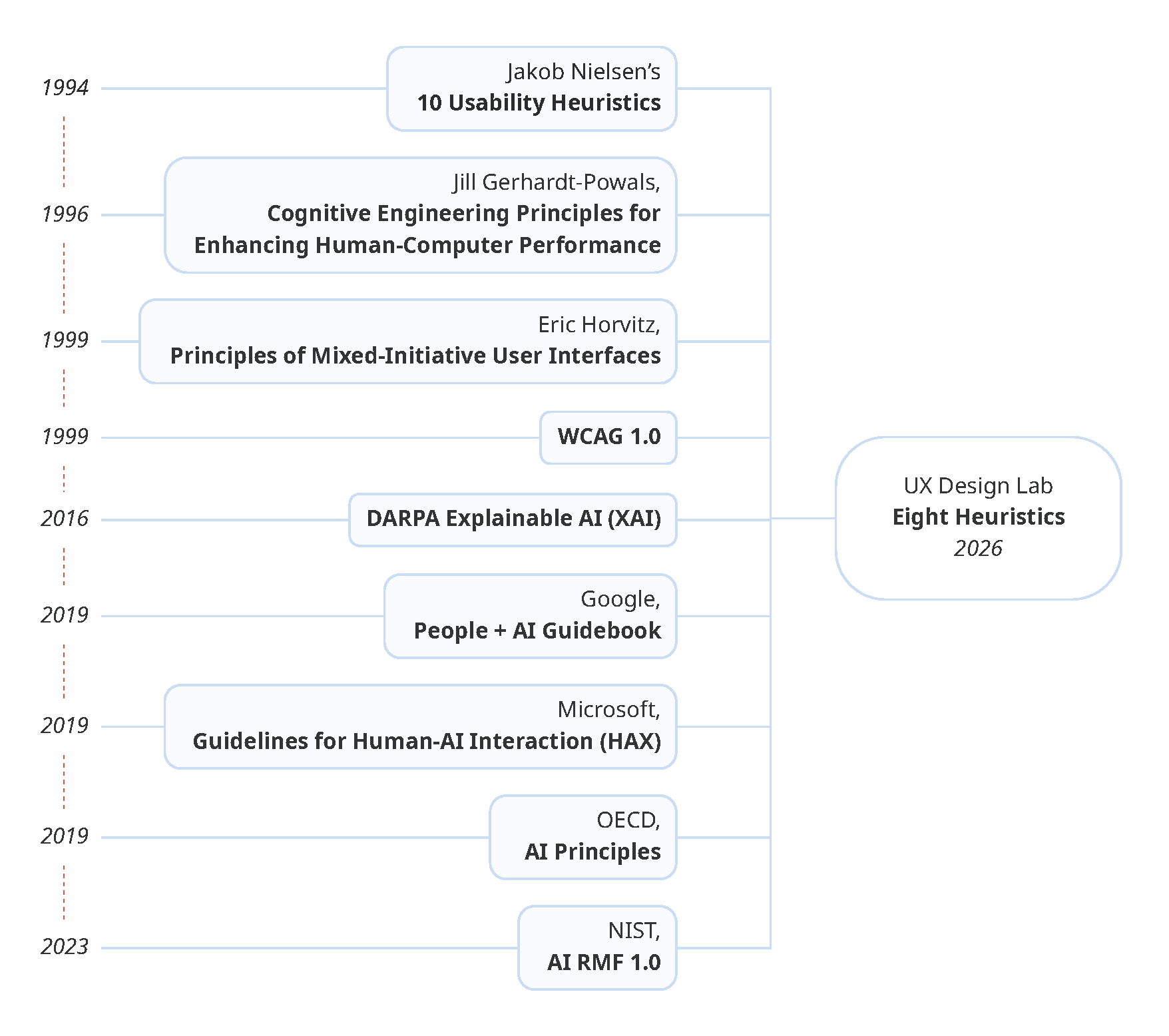
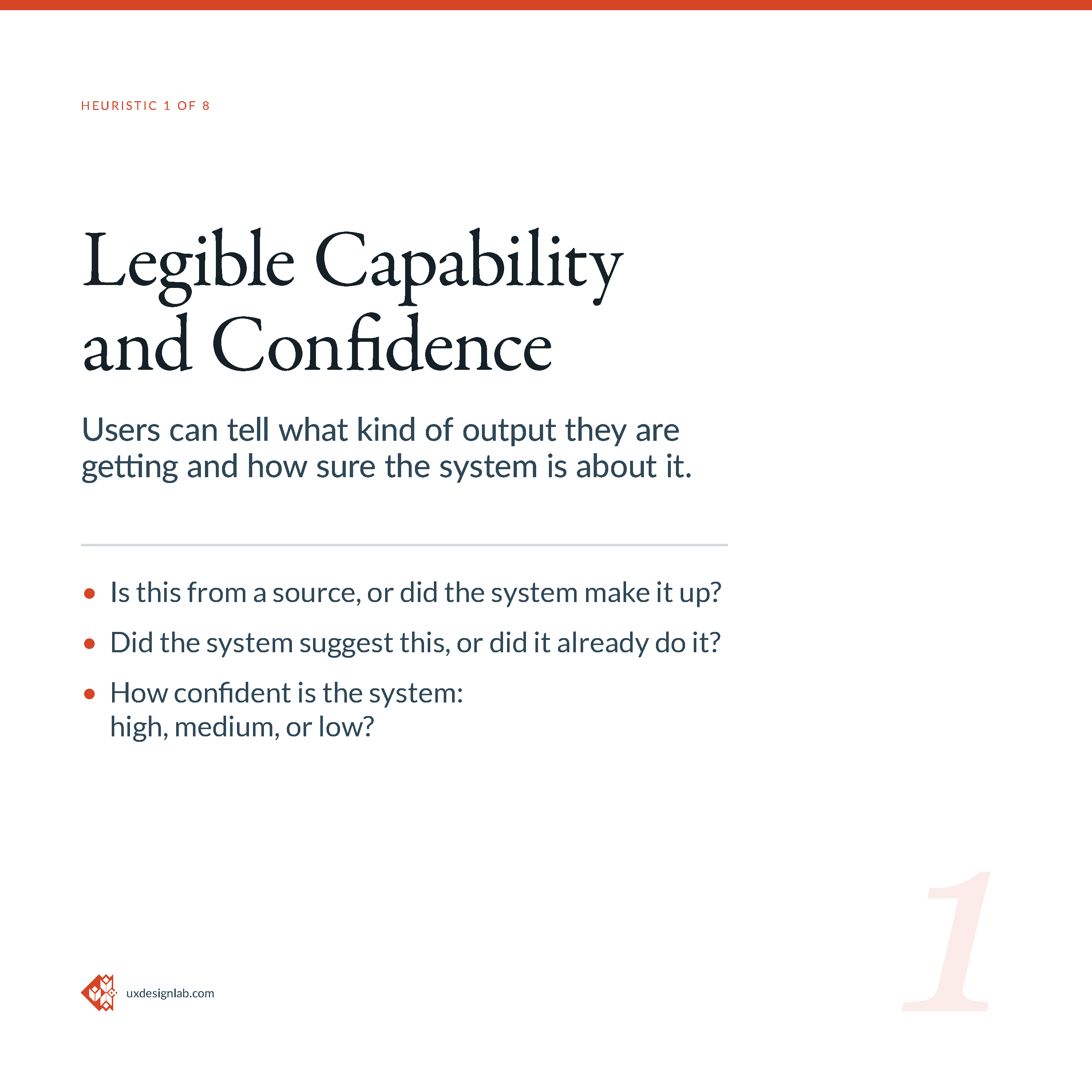
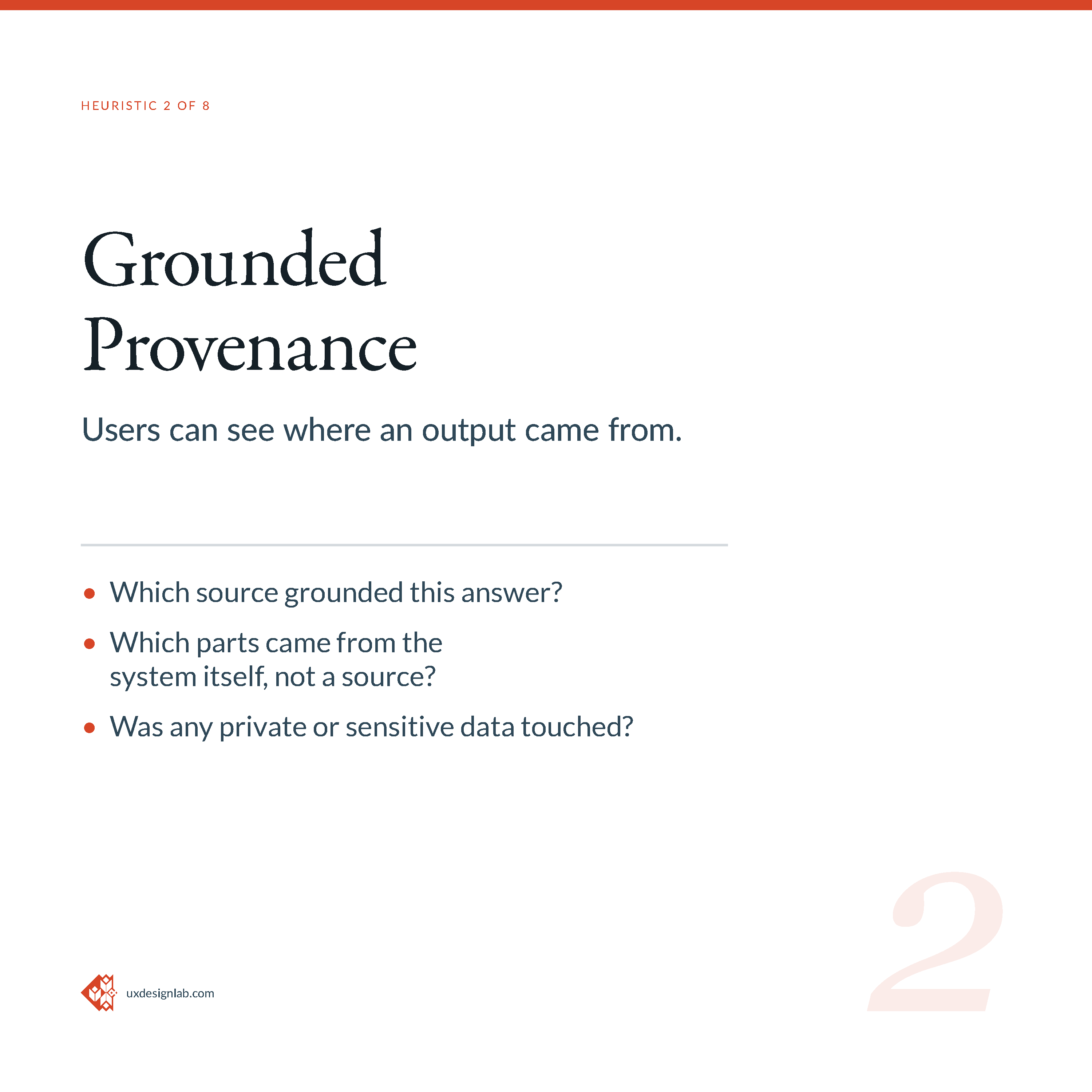
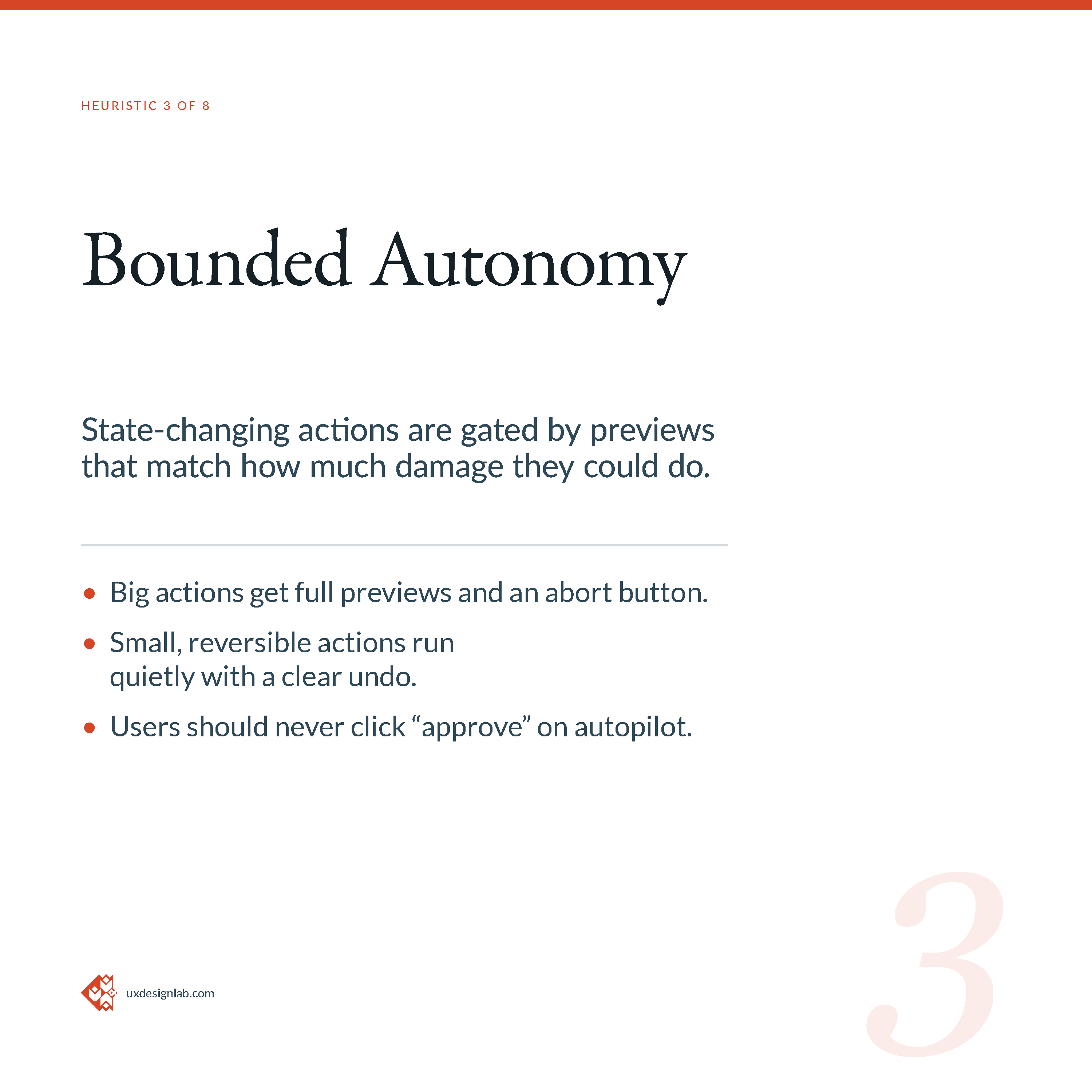
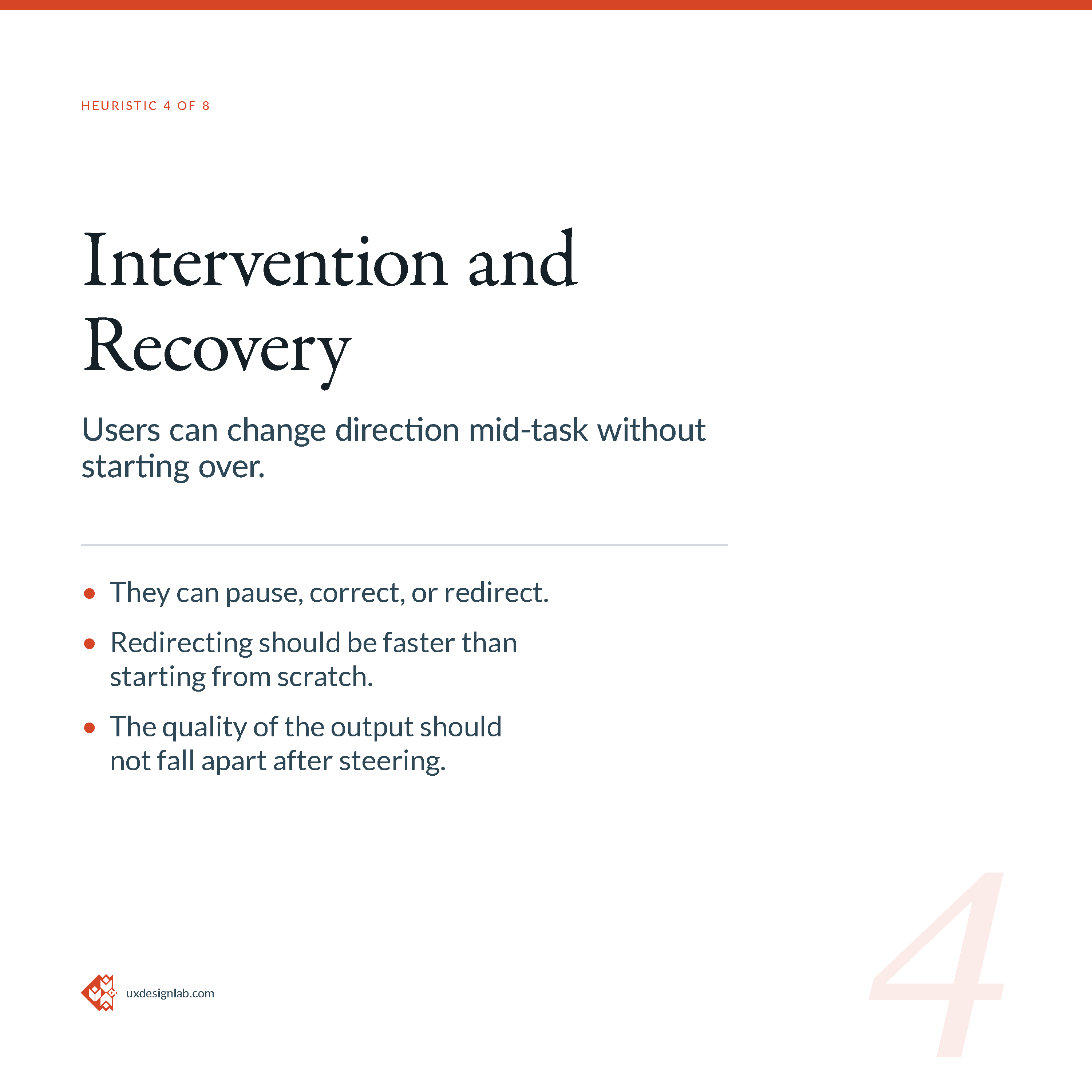
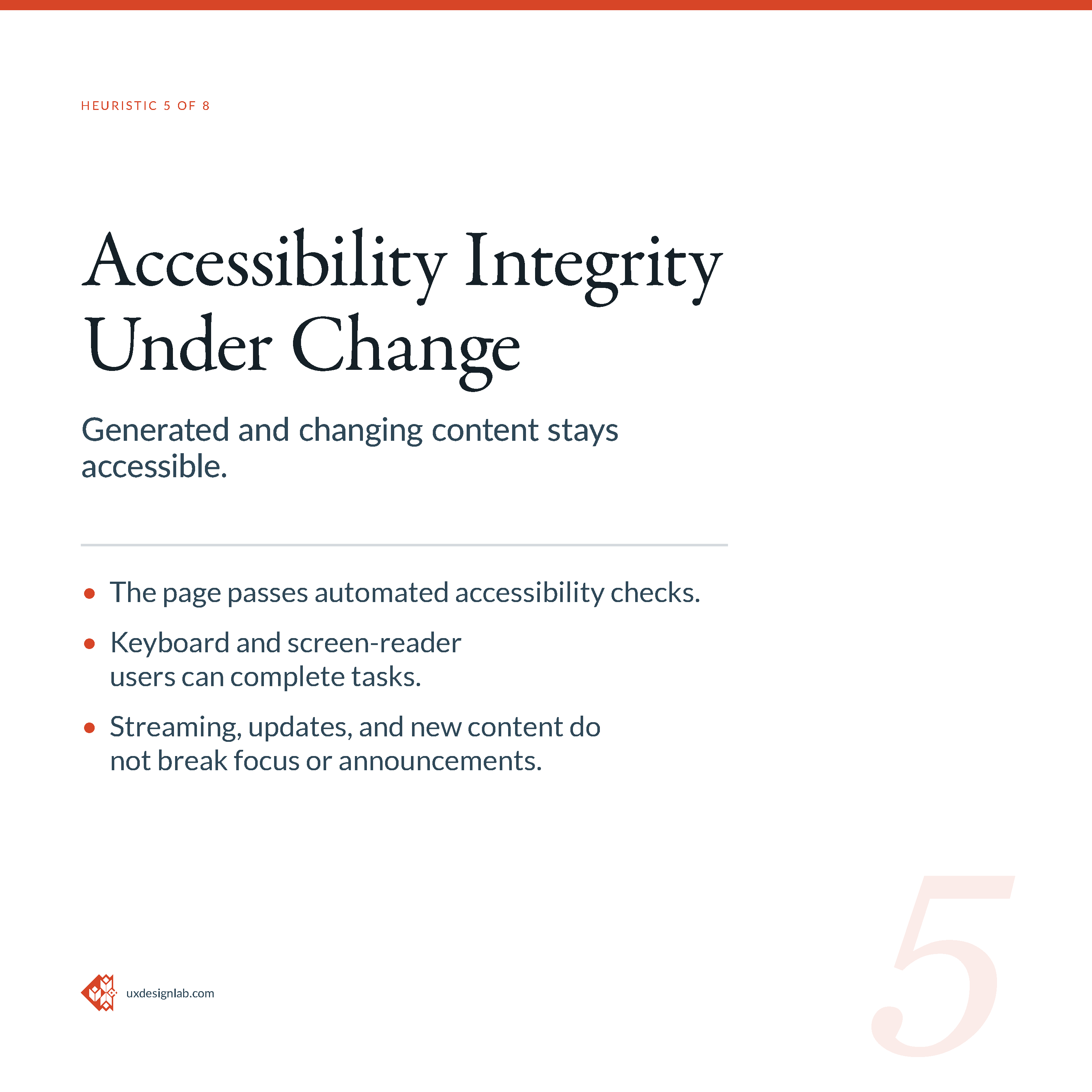
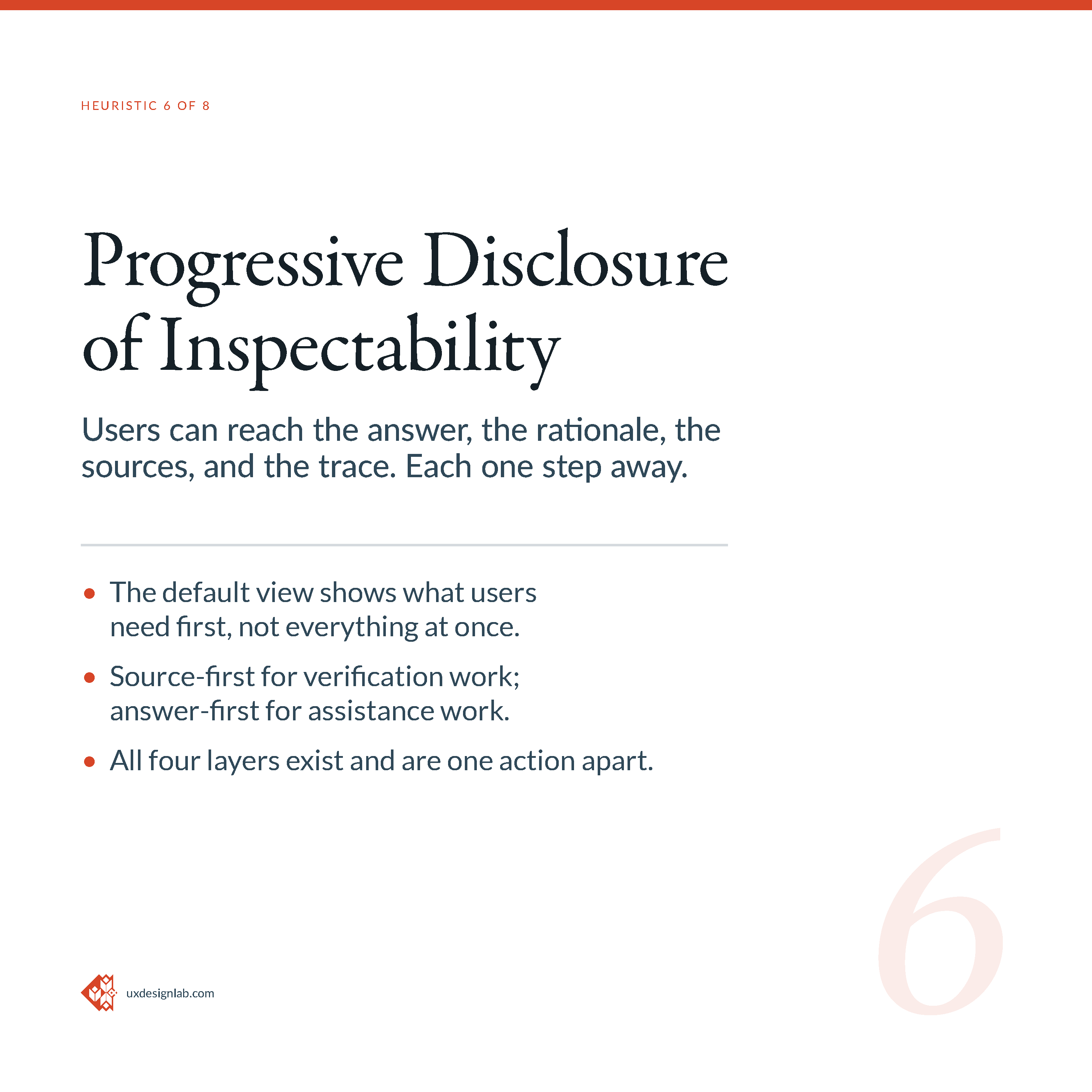
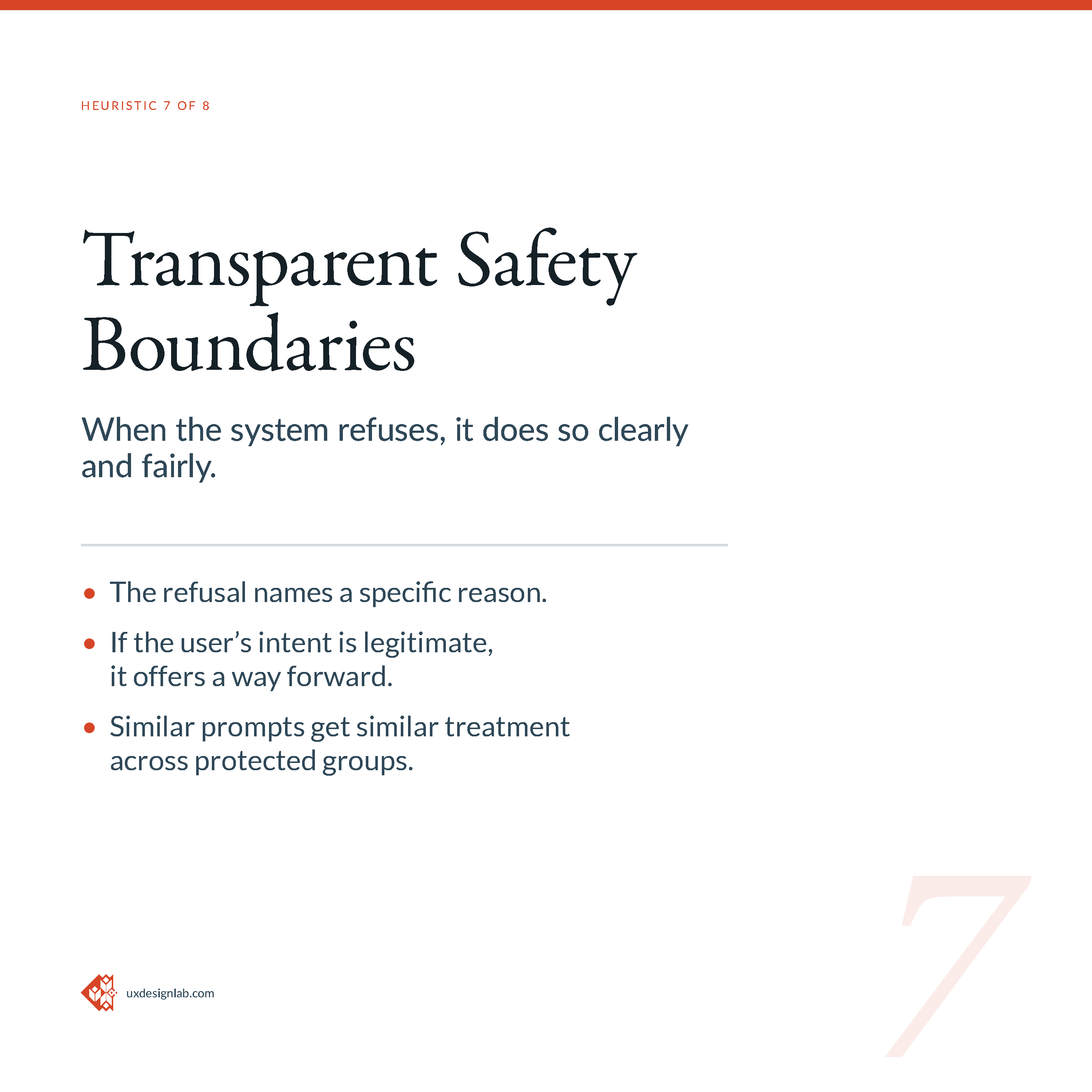
At UX Design Lab, we took what those frameworks established and extended them into something evaluable for the systems being built right now. Eight heuristics, each with a definition, a failure mode, a test you can actually run, and a pass/fail threshold. The mechanics that make them different from prior guidance include:
There is also a known soft spot we are actively working on: the tone evaluation in Heuristic 7 is intentionally qualitative, and the latency thresholds in Heuristic 8 are tiered to human perception but still interpretive. We named them in the document rather than hiding them. That is where the most useful pushback will come from.
This is v0.25, a working draft. The PDF gives the short version. The full document is linked below, view-only, no form.
If you use it on a real product and find a weak spot, a missing failure mode, or a place where it breaks under pressure, reach out. We want to build a stronger version with people who are actually doing the work.
Read the full framework in the Google Doc: Eight Heuristics for Generative and Agentic AI Products
Download the short PDF version: PDF
Listen · AI-narratedSummary
0:00Selected from the same topics.
What changes when the distance between a question and what we can create to explore it begins to collapse, and judgment becomes a harder skill?

We cannot predict every way an AI agent might interpret us. The guardrail belongs where interpretation becomes a consequence.

B2E AI adoption fails when teams design around personas instead of functions, risks, trust barriers, and human control points.
Tell me what you are building, changing, or trying to make better. You do not need a polished brief.
Prefer email? info@uxdesignlab.com
I read every inquiry personally and usually reply within one business day.